 I am not a fan of Ted Nugent, who went on from being quite a great rocker to being a really rockin' conservative. He's sort of like an updated Pat Boone to me. (We might recall that Boone made his career and millions of dollars covering songs written by Little Richard while the US was segregated and then never really mentioning it. Boone went on to being a conservative preacher and "motivational speaker.") But, Nugent did do something really great, in my opinion, as part of the Amboy Dukes' recording of "Journey to the Center of the Mind."
Where things are really not...the land unknown to man/
Where fantasy is fact...where if you go /you understand/that you might not come back."
In 1967, when I was twenty two, I fully expected to spend the rest of my life in a society that would be increasingly focused on exploring the Center of the Mind, discovering and using its wisdom. To me, that was what all the noise about the "dawning of the Age of Aquarius" was all about. That term was symbolic of an era of where the mind would discover "true liberation." And, things have sort of both worked out and not worked out that way.
The not working out is pretty damn clear all around us. Oppression, vehemence and rage remain pretty much as popular as always. (By the way, the Assad and the Qaddafi regimes really disgust me, as does Mugabe's. These are governors who clearly understand the sentiments behind Dylan's lines: "You know, they refused Jesus too /He said, 'You're not him.'")
On the other hand, there's been an enormous expansion of rights and inquiry. I personally think it is quite beautiful, for example, that gay people are beginning to have enough power to force the resignation of the law firm (hired by Speaker John Boehner at significant expense to the taxpayers) to defend the "Defense of Marriage Act." And, as the very proud father of a very bright daughter, I'm delighted to see the rights and achievements of women expanding.
Looking at the whole situation through a poet's lens, I do think that the Age of Aquarius is in something of a pause mode. There are plenty of times when the needle is jumping out of the groove (rut?) and showing what the new harmony might be, but then it drops back in and we're fighting over oil again. The general sense of wonder and possibility that was infusing many different classes of people throughout the West in the 60s and early 70s has been replace by a vague and sometimes not-so-vague unease. There are a lot of truly wonderful things happening, especially in the realms of technology and science, but they aren't woven together by an overarching aesthetic narrative held in common by a wide multitude of people.
In my view, in his poignant dream of St. Augustine, Bob Dylan advised us that there would be a marked slow down in the advent of the "new age." It is almost impossible to overstate Dylan's iconic status for my the new agers of my generation. A great poet whose range of emotional topics spanned the personal, the political, the funny and the cosmic. He continues to tell an amazing story in songs like "My Heart's in the Highlands." He spoke to his following directly in a way that The Beatles and The Stones approached periodically, although with not quite the same reliability, in my opinion.
 In St. Augustine, he calls for all of us who create to pitch in:
"Come out you gifted kings and queens
And hear my sad complaint
No martyr is among you now
Whom you can call your own
So go on your way accordingly
But know you're not alone."
From the moment I first heard this song, I thought Dylan was talking about himself. He released John Wesley Harding in the winter of 1968, relatively soon before he shifted to doing the very different kind of music he released on Nashville Skyline and the continuation of whatever that transition was in Self Portrait and New Morning. I believed that he was signalling that he would no longer be the artistic martyr that he had become for a people hungering for, desperate for spiritual leadership in this age of wrenching discontinuity. It is now up to all of us not a messianic figure of any sort. And, all of the prospective messiah figures keep proving that to us in spades, especially those from various evangelical movements who keep telling us that the world is coming to an end. (I don't see any reason to believe that the world is coming to an end, but it certainly seems sometimes that we've taken a wrong turn and don't know where the hell we are.)
So, what would a right turn look like?
I believe it has something to do with getting outside of one's own mind and its recurrent limiting patterns and concentrating in a way that leads one as a person and as a social influence to a re-dedication to the journey and adventure to the center of the mind.

This awareness of what one might know if one's personal mind would actually shut up periodically has been the subject of much conjecture and commentary since time immemorial. What is frequently called "mysticism" seems to have this as the center of its multifaceted and frequently confusing curriculum.
The Freemasons, who numbered Mozart and Benjamin Franklin among their members, have long been proponents of an inquiry into what the liberated mind might look like and do. I have problems with the Freemasons and most of the other Western occultists because I think they give a short shrift to Judaism. That is, they consider Christianity to be the "successor" religion to Judaism. According to a lot of occultists the Jews took things fairly far along but screwed up when they didn't accept Christ as the receptacle of wisdom toward which all of the Jews religious strivings had been longing. Furthermore, a lot of occultists think that the Jews took a lot from the pagan religions that preceded them or were coincident with them and that they did a lousy job of citing the original material. (This is the sort of thing that academics argue about all the time.) Needless to say, learned Jews, in the main, dismiss these assertions, although they would readily acknowledge that the Kabbalah of Issac Luria and others is clearly influenced by Neoplatonism and Gnosticism. Both of these traditions, as well as others, are very much part of the occult catalog.
So much for the critique. What do these Freemasons and occultists have to say about the center of the mind and its significance for humanity? The answer is: quite a lot.
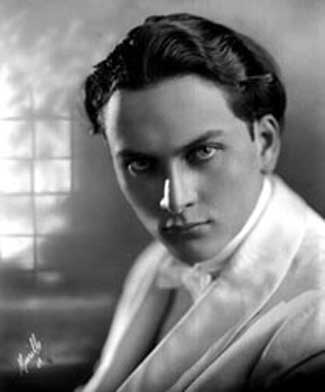 |
| Manly P. Hall |
Here's how Hall closes a chapter on the Hiramic Legend (Hiram of Tyre–or CHiram Abiff to his friends)–is described in the Bible as being "filled with wisdom and understanding and skill to work all works in brass" [I Kings VII: 13-14] as is believed to be the founder of the Freemasons, who think he did the real work of building Solomon's temple:
"The resurrection of the ancient Mysteries will result in the rediscovery of that secret teaching without which civilization must continue in a state of spiritual confusion and uncertainty.

"[When] peace is universal and good triumphant, humans will no longer seek for happiness, for they shall find it welling up within themselves. Dead hopes, dead aspirations and dead virtues shall rise from their graves and the Spirit of Beauty and Goodness, repeatedly slain by ignorant men, shall again be the Master of the Work. Then shall sages sit upon the seats of the mighty and the gods walk with us."
That's what I thought it was going to be like when we awakened from the dream of "pettiness which plays so rough."

