
Neil Young recorded "After the Gold Rush" in 1970. It was the title song to an astonishing album. In the many live versions of the song, the crowd pleasing line is always, "There was a band playing in my head/and I felt like getting high," but the core of the lyrics concerns "mother nature on the run in the 1970s" and the prospects of "a silver spaceships flying" that are going to take us to a "new home in the sun."
Is this trip really necessary?
No, but it's becoming ever more likely. If Mother Nature was on the run in the 1970s, she's got to be in an all out rampaging gallop by now. I don't think that there is any objective evidence to support the notion that our species can keep on burning this planet to a crisp and then dumping the refuse of our consumption on it and keep on living here indefinitely. And, yet, a lot of us believe that fantasy or feel too worn out and comfortable to do anything about it. Keep it up and we'll annihilate ourselves and maybe destroy the prospects of any life on Earth to boot.
 |
| From The Gurdjieff Legacy |
It's going to "take a lot of love to change the way things are." And, unfortunately, I'm not sure if love is the quality that alone defeats denial. Human behavior toward our mother earth lends credence to the Gurdjieffian notion that eons ago some wrong-headed angels implanted human beings with a "kundabuffer organ" at the base of the spine that makes us suffer from "egotism, conceit, vanity, selfishness and the like," which create extreme difficulty for us "to develop objective consciousness and conscience, as well as making humans susceptible to being manipulated and exploited by leaders, warmongers and ideologues for self-serving and profiteering motives."
(I actually read a fair amount of Gurdjieff–including 800 pages of the 1,100 page All and Everything!–but became somewhat less-than-enamored of the perspective when I came to view P.D. Ouspensky–author of The Fourth Way–as an anti-Semite. I loved Gurdjieff's Meetings with Remarkable Men, but Beelzebub's Tales to His Grandson just became too much of a slog.)
Gurdjieff or no Gurdjieff, we humans need to think a lot more clearly than we do; we need to see around the corner of our immediate action. Many of our systems are stretched and stressed to and beyond the breaking point. About ten years ago, Dylan said that "everything is broken." I'm not sure that I agree with that absolute indictment of our condition, but I am sure tired of all the "jiving and joking." How did it get so bad?
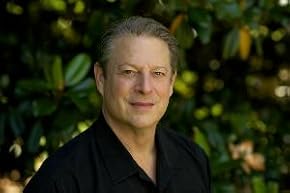
Although his The Assault on Reason didn't sell an extraordinary number of books (currently #205,718 in Amazon's book list; available for 1¢/copy), Al Gore's analysis of modern American politics makes the case that our democracy is being systematically dumbed down by corporate interests in particular who derive a short term benefit from the economics of low taxation, low carbon costs, and low investment in things we desperately need to be investing in heavily, such as revitalizing our infrastructure and kicking the oil habit. Tom Friedman makes the same point in Hot, Flat, and Crowded 2.0: Why We Need a Green Revolution--and How It Can Renew America. In Merchants of Doubt Naomi Oreskes and Erik Conway demonstrate to my satisfaction that a gaggle of corporate interests have been successful in co-opting a relatively stable group of prominent scientists to generate just enough ambiguity regarding very clear data to make it easy for the general populace to question facts and maintain indifference on issues ranging from smoking causing cancer to burning carbon (another form of smoking) causing global warming (another form of cancer).
(By the way, if I sound like an anti-corporate scold, I'm not. I think that the private sector has repeatedly demonstrated the ability to innovate in ways that the government cannot and will not. People respond to economic incentives or, to put it another way, I know that I certainly do. I am very impressed with IBM's Smart Cities initiative and GE's Ecomagination undertaking. A good friend of mine recently asserted that "the mission of business is to make money." If that's it, we're in big, big trouble. I don't believe this. I think that a lot of corporations are taking the tack laid out by Peter Senge in his important book, The Necessary Revolution where good long term business strategy and ecological thinking and action are tightly aligned.)
What is to be done? How do we clear our minds and what would be the result of our doing so?
 |
| From Pyschosynthesis, Nederlands |
Okay, if I really knew the answers to these questions I'd be taking over Dr. Phil's slot on TV, which I would like to do because I can't stand listening to guys (and gals) like that. There are multiple recommendations on the matter that all seem to cluster around using concentration to cancel out the noise and gibberish. Roberto Assagioli, the founder of Psychosynthesis (about whom I am going to write in more depth at some point), described the basic challenge confronting humanity as the cultivation of "will." The ability to think and act not in the interest of immediate gratification but toward the unification of the everyday self with both the individual and the collective deeper self–the self that can see the integrated nature of all being–this is the road out. While his association with the notorious anti-Semite–is it just me or are they everywhere?– Alice Bailey greatly tarnishes Assagioli's reputation–especially since he was born Jewish –one is advised to separate the great amount of wheat from the fair amount of chaff that can also be found in his writings. (I should only make anything like as much of a contribution!)
But, I believe with every fiber of my being–and I know from the most profound experiences of my life– that inculcating the collective will (and courage) to see beyond the seeming fragmentation of the moment to discover the existence of eternity in each instance of the present is not only possible but absolutely transformational. It will change humanity's attitude toward our planet instantaneously. That is the knowing what will ripple through the sleeper cell when it wakes up.


No comments:
Post a Comment